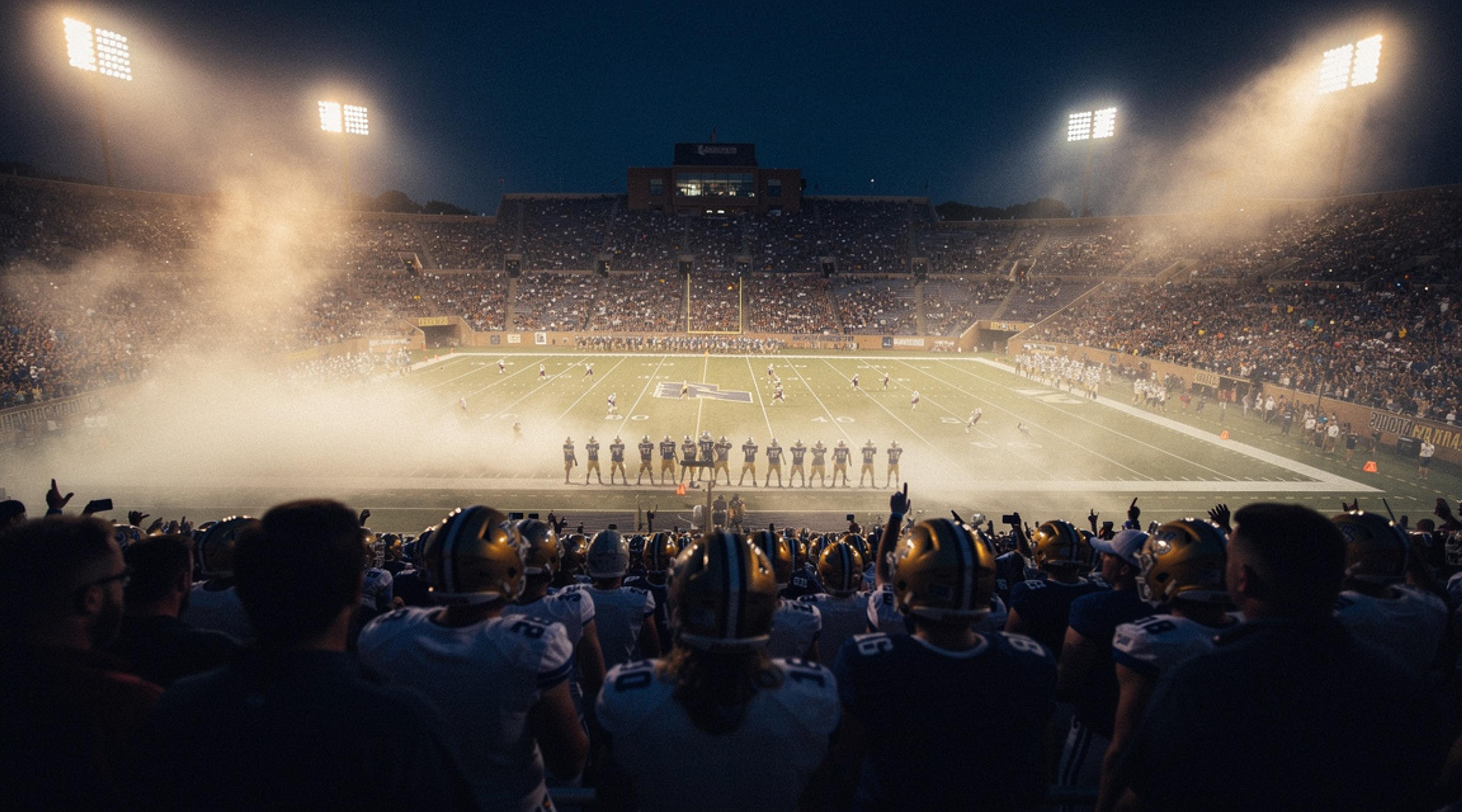
Four days before Boise State opens at No. 2 Oregon on Saturday, the Pac-12 enters its rebuilt 2026-27 era with Washington State and Oregon State joined by Boise State, Fresno State, Colorado State, San Diego State, Texas State and Utah State in football. Gonzaga joins the conference for basketball.
The additions bring the league from two remaining schools after 10 departed for the Big Ten, Big 12 and ACC back to the NCAA’s eight-school FBS minimum. The NCAA gave the Pac-12 a two-year window to reach that mark.
That puts Washington State and Oregon State in position to make the Pac-12 a lasting FBS home rather than become targets in another round of realignment.
Commissioner Teresa Gould framed the rebuild as a new version of a 110-year-old league.
“We're marrying tradition with transformation,” Gould said. “We're taking the legacy and the 110-year history, and we're reimagining it into something new and modern in 2026.”
Washington State and Oregon State kept authority over the conference and millions of dollars in assets after their November 2023 legal victory over the departing schools. The Pac-12 Network later shut down amid massive layoffs, and a court fight over Mountain West exit fees ended in a $49 million settlement.
Boise State went 9-5 last season, while Washington State finished 7-6.
Colorado State coach Jim Mora, who coached UCLA for six seasons in the former Pac-12, described the new structure: “The name of the conference is very familiar to me. The structure and the teams is brand new, and I don't really know what to expect.”
Articles are drafted from Josh Pate's College Football Show under the site's editorial standards and monitored by the editorial team — corrections are timestamped, never silent.
CONTINUED FROM THE NOTEBOOK
Court orders create new college football eligibility paths
Certain 2022 high-school graduates could receive a fifth season in 2026–27, while some former professionals have a contested path back to college sports.
ANALYSISProduced with Pate State AI · reviewed by The Pate State editorial teamStandards 📝 The NotebookTS
The Pate State StaffSEP 1, 2026
Recent court orders have created additional transfer and eligibility paths for some athletes, potentially adding experienced players to a roster market already shaped by the portal.
The broadest ruling could affect certain members of the 2022 high-school class who exhausted four years of eligibility. Yahoo Sports reported that “U.S. District Judge Charlotte Sweeney granted a class-wide preliminary injunction giving high school class of 2022 athletes who exhausted their four years of eligibility a fifth year for the 2026–27 season.”
That could give football programs another group of veterans to retain or recruit while making eligibility planning less predictable. Unless courts, Congress or the NCAA establish enforceable limits, college football’s roster-building system could move further toward open free agency.
A separate restraining order from District Court Judge William Jorden on Aug. 16 allowed several former professional athletes to return to college sports, enter the transfer portal and use previously surrendered eligibility, Yahoo reported. The SEC and Big Ten protested that order and adopted rules barring their teams from hiring former professional athletes.
Yahoo reported additional filings and challenges after Jorden’s order. The athletes and teams covered by the orders have not been identified, and the final terms of the SEC and Big Ten restrictions have not been specified.
The rulings extend a legal fight that already changed transfer rules. A Dec. 13, 2023, temporary restraining order from U.S. District Court Judge John Bailey affected transfer limits and waiting periods; Yahoo reported that the NCAA changed its portal rules afterward. The Supreme Court’s 2021 NCAA v. Alston decision unanimously upheld findings that the NCAA violated antitrust rules involving certain compensation-related restrictions.
For now, coaches must recruit and retain players before the rules governing that pool are settled.